

A familiar product label does not answer every medication question. Reliable equine medication product information brings together the stated ingredients and directions, the horse’s treatment needs, and any applicable competition rules. A product name alone cannot show whether it is suitable for a particular horse or event.
It is understandable to want a clear answer before giving a medicine or supplement, especially when balancing horse welfare with competition responsibilities. Ask what the product contains, where to get advice about medication concerns, and whether an ingredient could raise a prohibited-substance issue.
This guide explains how to approach equine medication rules in Australia, what to consider when questions arise, and why supplement labels need careful attention. It also shows how to connect product information with veterinary advice and the requirements of the relevant competition.
Key Takeaways
- Before administering medication, identify the rules that apply to the horse’s competition and treatment circumstances.
- Discuss a proposed supplement with your veterinarian so its need and suitability can be assessed for your horse.
- Review ingredient information carefully, as a supplement’s label may not disclose every substance that could matter in a drug test.
- Understand what product information can tell you, and where professional guidance is needed to interpret medication questions.
Equine drugs and medication rules
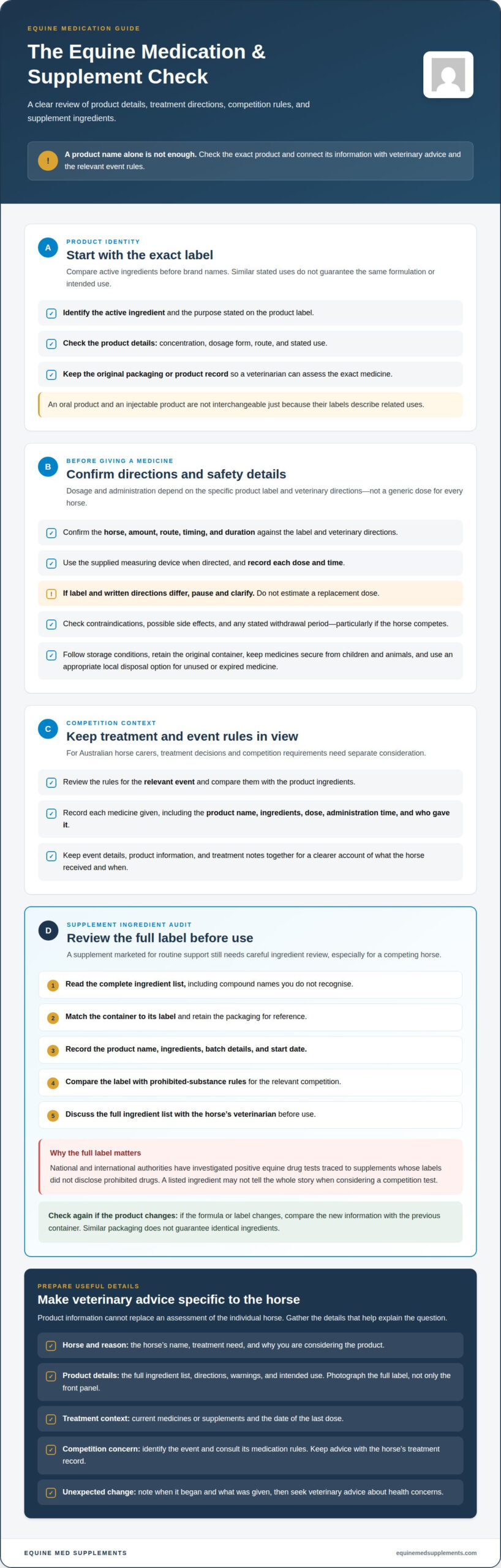
For Australian horse carers, keep treatment decisions separate from competition requirements. Start with the product label, then review the relevant event rules and record each medicine given.
Ingredient, Brand, and Use Comparisons
Compare active ingredients before brand names. Products from different brands may share an ingredient, while products with similar stated uses can differ in formulation, strength, or intended use. Check the label for the ingredient, concentration, dosage form, route, and stated purpose. An oral product and an injectable product, for example, are not interchangeable just because their labels describe related uses.
Available Medications and Their Uses
To compare equine medications in Australia, identify the active ingredient and the purpose stated on each product label. Brand names help identify products, but do not establish that one suits a particular horse or treatment need. Keep the original packaging or product record available so a veterinarian can assess the exact medicine and its stated use before treatment decisions are made.
Dosage and Administration Instructions
Dosage and administration depend on the specific product label and veterinary directions, not a generic dose for every horse. Before giving a medicine, confirm the horse, amount, route, timing, and duration against those instructions. Use the supplied measuring device when directed, and record each dose and time. If the label and written directions differ, pause and clarify before administering. Do not estimate a replacement dose.
Contraindications, Side Effects, and Withdrawal Periods
Check contraindications, possible side effects, and any stated withdrawal period before treatment, particularly if the horse competes. These details depend on the product and circumstances, so do not assume another brand’s directions apply. Follow the label’s storage conditions, retain the original container, and keep medicines secure from children and animals. Dispose of unused or expired medicine through an appropriate local medication-disposal option, rather than pouring it away or leaving it accessible.
Equine medication questions and support
Medication questions are easier to address when you have the relevant treatment details ready. Note the horse’s name, the product and its ingredients, and why you are considering it. Include current medicines or supplements and the date of the last dose. These details help a veterinarian assess the situation rather than respond to a product name alone.
Before starting a supplement, discuss its suitability for that horse with a veterinarian. Share the full ingredient list and intended use, and explain the horse’s health needs and competition schedule. A supplement is not automatically suitable just because its label describes a familiar purpose. Clear questions help focus the discussion on the horse, the product, and the reason for use.
For a competition-related concern, identify the event and consult its medication rules. Keep the event details, product information, and treatment notes together. A useful record includes the product name, ingredients, dose, administration time, and who gave it. This gives the veterinarian or relevant event contact a clearer account of what the horse received and when.
When seeking equine medication product information, identify the precise concern: an ingredient, a possible interaction, administration, or competition eligibility. Photograph the full label, including directions and warnings, rather than only the front panel. If the horse shows an unexpected change after receiving a product, note when it began and what was given. Seek veterinary advice about health concerns, as product information cannot replace an assessment of the individual horse.
Keep the veterinarian’s advice with the horse’s treatment record, so carers can refer to it consistently. For a product-focused starting point, explore equine medication options alongside veterinary advice.
When considering a supplement, connect the reason for use with the horse’s health needs. This keeps the discussion focused on the specific question instead of relying on a familiar label claim. Before starting a horse on a supplement, consult a veterinarian about whether it is medically necessary or beneficial for that horse. Keep that advice with the product details to guide the decision.
Supplement ingredients and prohibited substances
Supplement labels matter for competing horses because ingredients can affect medication decisions. National and international authorities have investigated positive equine drug tests traced to supplements whose labels did not disclose prohibited drugs. A listed ingredient may not tell the whole story when considering a competition test.
Common horse medications do not share one active ingredient, dosage form, or strength. Each product’s label identifies its own ingredients, form, strength, directions, and intended use. Compare those details directly rather than relying on a product category or familiar brand name.
Use this label review before adding a supplement to a horse’s routine:
- Read the complete ingredient list, including any compound names you do not recognise.
- Match the container to its label and retain the packaging for reference.
- Record the product name, ingredients, batch details, and the date it was started.
- Compare the label with the prohibited-substance rules for the relevant competition.
- Discuss the full ingredient list with the horse’s veterinarian before use.
A supplement marketed for routine support still needs the same ingredient review as one used around competition. Keep the label and purchase details together so you can identify the product if a question arises. If the formula or label changes, compare the new information with the previous container before continuing use. Similar packaging does not guarantee identical ingredients.
For competing horses, review ingredients before introducing a new product, not after an unexpected test result. Share the precise product label with the veterinarian and identify the applicable competition rules. A label can inform that discussion, but cannot establish competition suitability by itself. Careful records make it easier to trace what the horse received and when.
The US Food and Drug Administration does not test supplements to guarantee their safety, efficacy, quality, or consistency of ingredients between batches. Some supplement oversight systems may allow manufacturers to change formulas or labels without notifying customers.
A label and formula may therefore differ between purchases. Check the information on each container, even when the product name is familiar, and review any changed label with the veterinarian before use. Keeping the previous label can help you identify what changed.
What equine medications are available in Australia, and what are they used for?
Australian horse carers encounter medicines and supplements with different ingredients, dosage forms, and intended uses. A brand name identifies a product, but the label provides the details needed for comparison. Start with the active ingredient, then read the stated purpose and directions before considering how the product fits the horse’s care.
Reliable equine medication product information should help distinguish a product’s identity from its intended use. A label may describe a medicine’s form, strength, route, and directions. Compare those details across products instead of assuming similar names or uses make them interchangeable. A veterinarian can interpret product information in light of a horse’s specific needs.
Use this simple comparison when reviewing an Australian product:
- Ingredient: identify the active ingredient stated on the label.
- Brand: note the exact product name to avoid confusing similar packaging.
- Form: identify whether the product is supplied in a form for oral or other administration.
- Purpose: read the label’s stated intended use, not just its headline wording.
- Directions: review the stated dose, route, and any warnings.
Two products described for a similar purpose may have different ingredients or forms. That difference matters when comparing instructions and discussing a product with a veterinarian. Keep the full label handy rather than relying on a remembered brand or short product description. If the label does not answer a question about use, do not infer instructions from another product.
Availability and suitability are separate considerations. A product may be accessible in Australia, yet its labelled purpose, formulation, and directions may not suit a horse’s circumstances. For a sound comparison, collect the product name and label, note the intended use, and discuss the information with a veterinarian before making treatment decisions. This helps horse carers understand what a product says without treating its brand name as a treatment recommendation.
Equine Med Supplements: FLUMAX 50 ml
Equine Med Supplements lists FLUMAX 50 ml for horse carers reviewing equine medication options. Product names alone do not explain ingredients, intended use, dosage, or suitability, so use the product label and veterinary advice to assess whether it fits your horse’s needs. This is particularly important when comparing a product with another medicine or considering competition requirements.
The listed range also includes Edo Modifor, dexaphenylbutazone, and Aspirin protect 100 mg. Each is a distinct product, so avoid assuming that their uses or directions are interchangeable. Keep the exact product name available when discussing a treatment decision with your veterinarian.
For product information, visit Equine Med Supplements.
Make your next medication decision with care
Build a practical routine around clear records, deliberate product comparisons, and veterinary input. Keep the horse’s treatment history current, especially when care changes or competition plans affect decisions. This provides everyone involved with a consistent reference point and helps prevent assumptions based on a familiar brand name or outdated label.
Useful equine medication product information supports informed questions, but it does not replace advice tailored to the horse. Equine Med Supplements offers FLUMAX 50 ml, Edo Modifor, and dexaphenylbutazone. Consider product information alongside the horse’s circumstances and the relevant directions, rather than treating a product name as a recommendation.
For a practical next step, contact Equine Med Supplements to discuss its listed equine products. Contact Equine Med Supplements and continue building a considered approach to your horse’s care.
Frequently Asked Questions
Drug or Medication Questions?
For a medication question, start with the exact product and the situation prompting your concern. Tell your veterinarian, for example, whether you are asking about a missed dose, a possible reaction, or a change in the horse’s behaviour. Keep the container handy and note when the issue began. Focused questions make equine medication product information more relevant to the decision at hand.
Which equine medications require a veterinary prescription in Australia?
Prescription requirements depend on the individual medication and its supply classification in Australia, so a product name alone cannot determine the answer. Review the product’s supply details and directions, and ask a veterinarian or pharmacist about the specific medicine before obtaining or administering it. Two products intended for related purposes, for instance, may have different ingredients and supply conditions, so do not assume one product’s requirements apply to another.