
Yes, horses can take some tablets whole, either directly or in a small amount of feed, but the right method depends on the medication and the horse. Questions before giving horse medication include whether it can be given with feed, how to administer it, and how to confirm the full dose was swallowed. Follow the medicine’s directions, and don’t crush a tablet unless this is approved for that medication.
It can be difficult to tell whether a dose has been fully consumed, especially if a horse sorts through its feed or spits out liquid. A calm routine, a suitable delivery method and a careful check afterwards can make giving medication clearer and less stressful for both horse and handler.
This guide explains how to prepare and give oral medication, check how much your horse has taken, and monitor for expected effects and possible side effects. It also covers what to do if your horse refuses a dose, so you can follow a practical plan.
Key Takeaways
- Prepare the dose and handling equipment before approaching your horse, then use a calm, consistent routine.
- Offer medicated feed in a limited portion and check the trough for uneaten medicine before providing more.
- Track the expected response over the timeframe relevant to the medicine, and watch for changes that may signal a side effect.
- If your horse refuses a dose, consider whether the delivery method or medication routine needs adjusting rather than assuming the full dose was taken.
Common and serious side effects
Before giving medication, ask what reactions to watch for and when they may appear. For pregnant, lactating, young or older horses, confirm the medication’s suitability and dose with your veterinarian before giving it. Share the horse’s age, reproductive status, health conditions and current medicines.
- Record the baseline. Before the first dose, note your horse’s appetite, water intake, manure, behaviour, and usual energy. These details help you recognise changes after treatment. Keep the medicine packaging and dosing instructions nearby, so you can accurately report the product and amount given.
- Watch for changes after each dose. Look for new signs such as reduced appetite, loose manure, unusual restlessness, skin irritation, or facial swelling. Record when a sign starts, how it changes, and whether it follows a dose. Do not assume every change is a medication reaction, but report it promptly.
- Know which signs need urgent action. Difficulty breathing, collapse, marked swelling, or severe distress needs immediate veterinary attention. Stop and seek urgent advice before giving another dose if a serious reaction appears. Keep the medicine name and the time of the last dose ready when describing the signs.
- Use Australian support appropriately. For a human emergency in Australia, call triple zero (000) and ask for an ambulance, according to the Australian Communications and Media Authority. For a person needing medicine-side-effect advice, healthdirect Australia offers a registered nurse through 1800 022 222; in Victoria, this service is known as NURSE-ON-CALL. These are human health contacts, not horse-care services.
- Prepare clear details for your veterinarian. Write down the horse’s weight estimate if available, the medicine name, dose, administration time, and observed signs. Include other medicines and recent changes to feed or routine. This record helps your veterinarian assess the situation and advise whether the next dose should be given.
Confirming the full dose was consumed
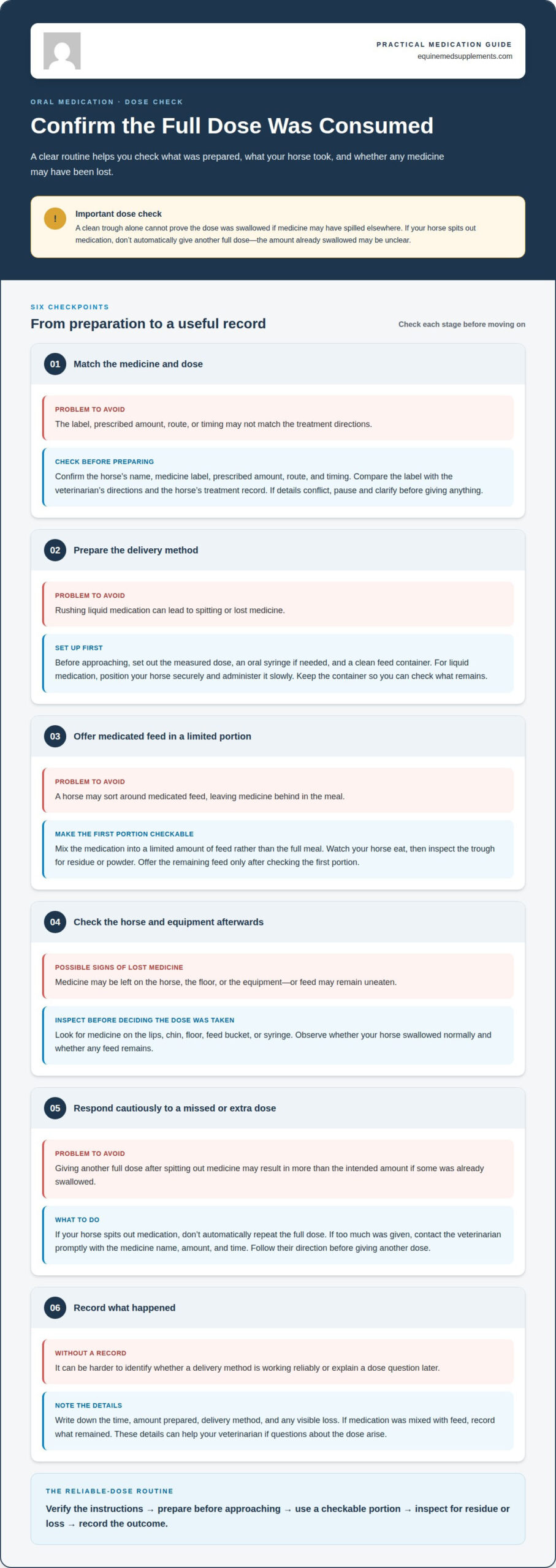
- Match the medicine and dose to the instructions. Check the horse’s name, medicine label, prescribed amount, route, and timing before preparing it. To confirm the correct medication and dose, compare the label with the veterinarian’s directions and the horse’s treatment record. If details conflict, pause and clarify before giving anything.
- Prepare the delivery method. Set out the measured dose, oral syringe if needed, and a clean feed container before approaching. For liquid medication, position your horse securely and administer it slowly; rushing can lead to spitting or lost medicine. Keep the container until you can check what remains.
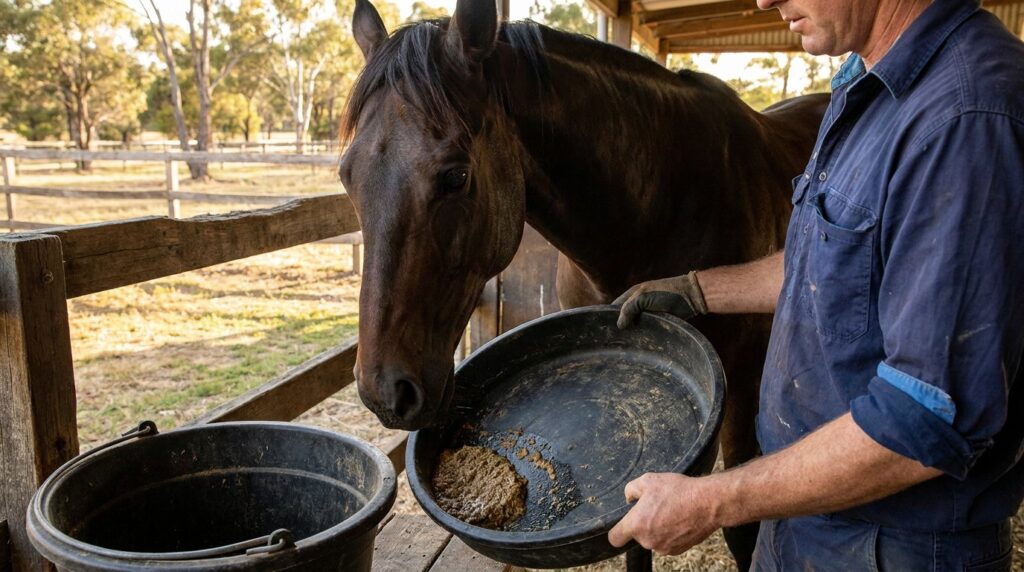
- Use a small feed portion. Mix medication into a limited amount rather than the horse’s full meal. Watch the horse eat, then inspect the trough for residue or powder. Some horses sort around medicated feed, leaving medicine behind; offer the remaining feed only after checking the first portion.
- Check the horse and equipment afterwards. Look for medicine on the lips, chin, floor, feed bucket, or syringe. Observe whether the horse swallowed normally and whether any feed remains. A clean trough alone cannot prove a dose was swallowed if medicine may have spilled elsewhere.
- Respond cautiously to a missed or extra dose. If your horse spits out medication, don’t automatically give another full dose; the amount already swallowed may be unclear. If too much was given, contact the veterinarian promptly with the medicine name, amount, and time. Follow their direction before giving another dose.
- Record the outcome. Note the time, amount prepared, delivery method, and any visible loss. If medication was mixed with feed, record what remained. These details help identify whether a particular method works reliably and give your veterinarian useful information if dose questions arise later.
Expected benefits of a medicine
- Confirm prescription status before use. In Australia, whether a medicine requires a prescription depends on its specific product and active ingredient. Ask your veterinarian to identify its status and intended use before obtaining or administering it.
- Set a competition withdrawal plan. There is no single withdrawal period that applies to every medicine or event. Ask your veterinarian about the medicine, dose and route, then check the relevant racing or competition rules before treatment. Record each administration and follow the applicable interval before entering an event.
- Ask what improvement should look like. Tie the expected benefit to the reason for treatment, such as easier movement, improved comfort, or a change in appetite. Agree on what to observe and record, rather than relying on a general impression. A clear measure makes it easier to judge whether the intended change is occurring.
- Clarify when to assess the response. Ask when the medicine should begin working and when to review its effect. The timeframe depends on the medicine and the intended outcome. Record daily observations, such as willingness to move or feed, and compare them with the horse’s usual pattern.
- Disclose every medicine and supplement. Before starting treatment, give your veterinarian a complete list of prescription medicines, non-prescription products, supplements, and recent doses. Interactions may change a medicine’s effect or increase unwanted reactions. Include products given by another caretaker, even when they seem unrelated.
- Do not substitute human or other-animal medicines. A product intended for a person or another species is not automatically suitable for a horse. The active ingredient, formulation, dose, and horse’s condition all matter. Give it only when your veterinarian has directed its use for that horse.
- Define the next step if benefits do not appear. Ask what observations should prompt a review and whether the treatment plan needs reassessment. Keep the medicine details and response notes together. This gives your veterinarian specific information for evaluating the horse’s progress.
Giving pills directly or hiding them in feed
- Choose a method your horse will accept. Oral medication often takes experimentation because horses differ in handling and feed preferences. Start with the method directed for that medicine, then observe your horse’s response. A horse that accepts a tablet in a small feed portion may resist direct administration, while another may refuse flavoured feed.
- Check before altering a tablet. Don’t crush or split a tablet unless its directions allow this. Crushing can change how some medicines work. If crushing is permitted, mix the powder thoroughly into a small amount of damp feed, then watch for sorting or uneaten residue.
- Use a pill popper calmly and carefully. Stand safely to the side of your horse’s head. Gently place the device in the interdental space between the incisors and molars, then guide it towards the rear of the mouth. Follow the device directions and avoid force; a calm, familiar routine can support cooperation.
- Make medicated feed easy to inspect. Mix the dose into a limited portion rather than a full bucket. Powder can settle at the bottom, and dry feed may make it more noticeable. Check the container for leftover feed or powder before offering the rest of the meal.
- Select masking ingredients with care. Applesauce may help disguise bitter powdered medicine. Molasses adds sugar and may interfere with absorption of certain medicines, so don’t use it without checking suitability. Introduce only a small, familiar portion, then observe whether your horse eats the complete serving.
- Adjust the approach if refusal continues. Repeated refusal may relate to stress, oral pain, or a negative association with dosing. Pause rather than turning administration into a struggle, and note what happened. For suitable equine medication options, review horse medication options and follow the directions for the specific medicine.
Equine Med Supplements: FLUMAX 50 ml
Equine Med Supplements supplies FLUMAX 50 ml for horse caretakers considering medication options. Its range also includes Edo Modifor, dexaphenylbutazone, and Aspirin protect 100 mg. Product names alone do not establish which medicine suits a particular horse or condition.
Follow your veterinarian’s directions when selecting and administering medication. Before using a product, clarify its purpose, whether it is suitable for the horse, the dose and method of administration, the expected response and possible side effects. Keep the product label and treatment notes together, especially if the horse takes other medicines or competes.
For product enquiries or help exploring the Dynacleine Injection 50ml horse product information and medication options listed in the Equine Med Supplements online shop, contact the team.
Carry good medication practice into the next step
Medication decisions are easier to manage when your horse’s treatment information stays organised and accessible. Keep a current record of medicines, supplements, administration dates, observed responses and changes discussed with your veterinarian. This gives everyone involved in your horse’s care a consistent reference and helps prevent routine details from being lost between treatments. The questions before giving horse medication should support informed decisions and clear communication about your horse’s care.
Equine Med Supplements offers FLUMAX 50 ml, Edo Modifor and dexaphenylbutazone. Consider these offerings in relation to your horse’s care plan, rather than selecting a product by name alone. Keep product information with your treatment record, and make sure caretakers have clear written instructions for their role. A concise handover can help keep observations and care routines consistent.
Explore Equine Med Supplements’ horse medication offerings and continue building a steady, welfare-focused routine for your horse.
Frequently Asked Questions
Can Horses Swallow Pills Whole?
Yes, a horse can swallow a tablet whole if the product directions allow it and the horse can take it safely. An important question before giving horse medication is whether that specific tablet can be given whole and whether feed affects its use. If the horse struggles to swallow, coughs or becomes distressed, stop and seek veterinary advice rather than forcing the tablet.
What information should I give a vet before medicating a horse?
Give your veterinarian the horse’s identity, age, approximate weight, current signs and when they began. Ask whether the horse’s other medicines or supplements could affect the proposed treatment. List each product, its last dose and any previous reaction. Mention competition plans, and bring the packaging or a clear photo to help identify the product.
How should horse medications be administered and stored?
Follow the product label and your veterinarian’s directions for route, dose and timing. Store medication as directed on the label, keep it in its original packaging and secure it away from feed and unauthorised access. Check the packaging and expiry information before use. If storage instructions are unclear or the product has changed in appearance, pause and seek advice.
What are common side effects and emergency warning signs after giving a horse medication?
Changes in appetite, manure, behaviour or skin can be signs to record and discuss with your veterinarian. Breathing difficulty, collapse, severe swelling or marked distress requires urgent veterinary attention. Note when the signs began and how they relate to the dose. Keep the medicine packaging available, and don’t give another dose while seeking urgent advice about a serious reaction.
What drug interactions should I check before giving a horse medication?
Tell your veterinarian about all prescription and non-prescription medicines, supplements and recent doses, including products given by another caretaker. Interactions may change a medicine’s effect or increase unwanted reactions.