
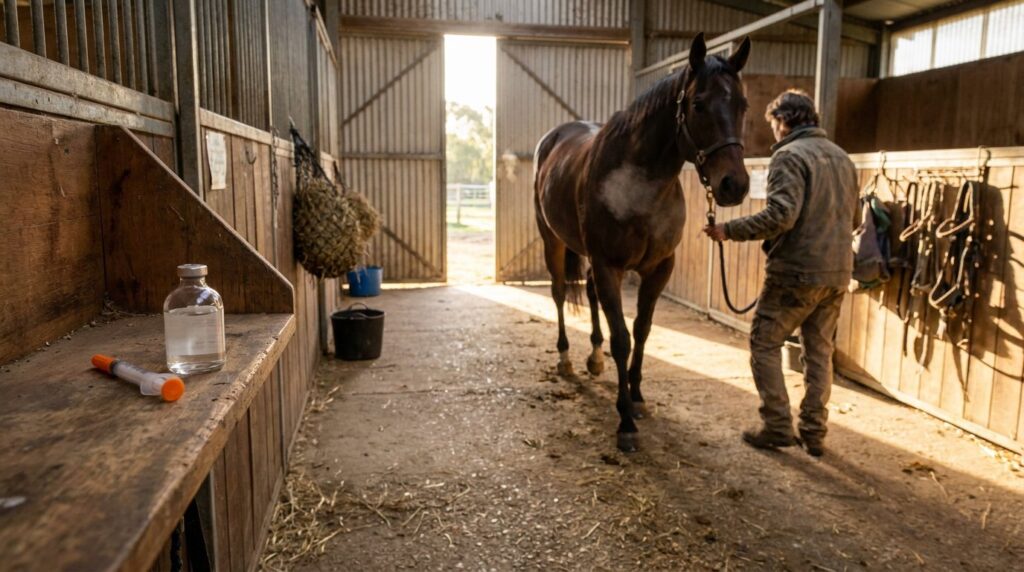
The advertised schedule for Dynacleine Injection 50ml for a horse is two to five injections within 24 to 48 hours. It is supplied in a 50 ml pack and advertised as containing 12.5 mg of adenosine triphosphate (ATP) per ml; a licensed veterinarian determines the dosage and treatment duration.
It’s understandable to want a clear treatment timeline when muscle fatigue or an injury affects a horse’s work and comfort. The schedule alone, however, doesn’t explain what the injection is advertised to do or which animals it’s intended for.
This article explains Dynacleine’s product description, advertised uses for horses and other animals, and claims about muscle fatigue and injuries. It also explains how the stated horse schedule and administration routes fit the product information, so you can discuss its use with a veterinarian.
Key Takeaways
- Understand the muscle-fatigue and intracellular energy benefits Dynacleine has been advertised to support, without treating advertised claims as a guaranteed outcome.
- Distinguish its stated animal uses, including its specific description for greyhound muscle injuries, before considering whether the product is relevant to an animal.
- Use the product description and administration information to frame a focused discussion with a licensed veterinarian about a horse’s treatment.
- For an equine medication product option, explore Equine Med Supplements’ FLUMAX 50 ml offering.
Claimed benefits for muscle fatigue and injuries
Product advertising describes Dynacleine as an ATP injection, with 12.5 mg per ml. It claims the injection may help reduce muscle fatigue and support intracellular energy production. These are related but distinct claims: one concerns a fatigue outcome, while the other describes a cellular energy process. The wording presents intended benefits, not a measured result for every horse. When assessing a treatment, keep the advertised purpose separate from the horse’s individual response.
Muscle fatigue can affect a horse’s ability to sustain its usual work, but the advertised claim does not specify a workload or recovery period. It gives no quantified change in fatigue or duration of relief. The practical question is whether the fatigue has a clear cause and whether the stated energy-support purpose fits the veterinary plan. Record the horse’s workload, observed changes and when they occur before discussing treatment.
Claims about injuries need a narrower reading. The product description links injection around a muscle injury site with faster recovery in greyhounds only. This wording should not be extended to equine ligament injuries, tendon or ligament damage, or every muscle injury. Swelling, lameness or reduced performance can have different causes, and a claim about energy production does not identify damaged tissue. For example, a suspected tendon injury is different from post-exercise fatigue.
Assess the advertised benefit in sequence: identify the concern, distinguish fatigue from a specific injury, then discuss the intended treatment with a veterinary professional. Consider what outcome would indicate useful relief and how it can be observed in that horse. An advertising claim alone cannot provide a diagnosis or demonstrate faster recovery. Keeping muscle fatigue, muscle injury, and tendon or ligament concerns separate helps prevent an ATP-related claim from being mistaken for evidence of injury healing.
Advertised uses for horses and other animals
Product advertising identifies racehorses, greyhounds, dogs and camels as animal groups for Dynacleine. It describes the injection as an ATP product, connecting its advertised use with athletic animals and energy support. These species are not interchangeable treatment cases. The animal’s species, activity and reason for use all shape how the product description should be understood. A horse’s ability to work, for example, does not establish that the injection suits a particular concern.
The injury wording is narrower than the general animal list. The description says Dynacleine may be injected around a muscle injury site to speed recovery in greyhounds only. This specific claim should not be extended to horses, dogs or camels, or to tendon injuries in any species. Keep the greyhound example separate from the broader advertised ATP use, especially when considering the animal and condition involved.
For the same acute soft-tissue injury, shockwave therapy is described as a different treatment approach. Its stated course is at least three treatments, spaced two to three weeks apart, with analgesic effects peaking approximately 48 hours after treatment. These details describe a separate modality, not proof that either option produces better results. Comparing them means distinguishing the treatment aim, the injury involved and the intended outcome.
On safety, the stated warning is that Dynacleine should not be used in animals intended for human consumption. A forum commenter reported hearing that the injections can be painful; this is an anecdotal report, not a defined side-effect rate. No other specific contraindications or side effects are established in the available product claims, so avoid treating the advertising as a complete safety profile. Discuss the intended species and use with a licensed veterinarian before administration. To review the product information in context, see the Dynacleine Injection 50ml product.
Dynacleine injection product description
Pack size and concentration identify the product, while handling and administration details affect its practical use. Australian classification and animal-use limits matter, too.
Product Description
Dynacleine is supplied in a 50 ml pack and advertised as containing 12.5 mg of adenosine triphosphate (ATP) per ml. This concentration describes the active component, not a treatment outcome or a dose for every animal. For a horse, distinguish the pack’s total volume from the amount administered. The product description also warns against use in animals intended for human consumption.
Meat and Milk Withholding Period
The product warning says Dynacleine should not be used in animals intended for human consumption. Do not treat a meat or milk withholding period as a safe way to use it in food-producing animals. The warning, rather than an assumed interval after treatment, is the key decision point. Make the animal’s intended use clear before discussing administration with a veterinarian.
Horse Dosage and Administration Route
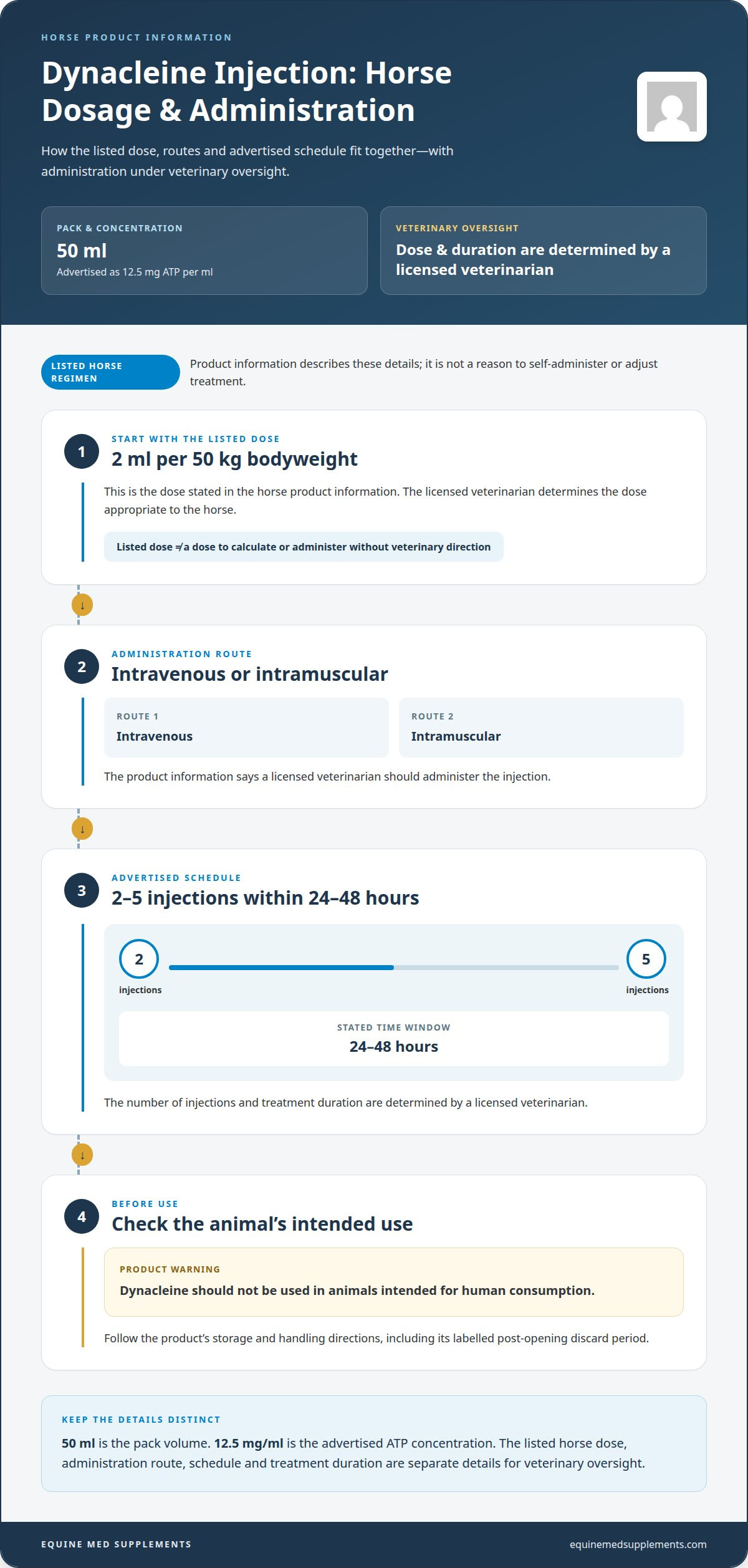
The listed horse dosage is 2 ml per 50 kg bodyweight, and the stated routes are intravenous or intramuscular. The product information says a licensed veterinarian should administer it and determine dosage and treatment duration. It also states that two to five injections may be given within 24 to 48 hours. These figures describe the listed regimen, not a reason to self-administer or adjust treatment.
Storage, Handling, and Shelf Life
Follow the storage and handling directions supplied with the product, and use the labelled post-opening discard period. The 50 ml pack size does not determine how long an opened container remains suitable for use. Keep administration under veterinary oversight, with the product handled according to its labelling. In Australia, the product description’s veterinarian-administration direction does not by itself determine prescription-only status or who may supply it.
What is the recommended horse dosage and administration route for Dynacleine Injection?
The listed horse dosage is 2 ml per 50 kg bodyweight. Dynacleine may be administered intravenously or intramuscularly, and a licensed veterinarian determines the dose and treatment duration. These details provide a framework for veterinary administration, not instructions for owners to inject a horse themselves.
To understand the weight-based calculation, apply the stated ratio to the horse’s bodyweight. For example, a 500 kg horse corresponds to 20 ml at 2 ml per 50 kg. This is an arithmetic illustration of the listed dosage, not an individual treatment direction. Accurate bodyweight matters because the stated amount is linked to weight, rather than being a fixed volume for every horse.
The listed routes are intravenous and intramuscular. They describe different administration pathways, so the route should not be chosen for convenience or assumed to be interchangeable by a handler. A licensed veterinarian selects the route and administers the product. The product information also assigns responsibility for treatment duration to the veterinarian, keeping route, dose and schedule within the same clinical decision.
For horses, the stated schedule allows two to five injections within 24 to 48 hours. That range does not mean every horse receives the maximum number, or that owners should repeat an injection independently. The veterinarian determines the appropriate course for the individual horse. Keep a clear record of the administered amount and timing so the treatment plan can be followed accurately.
Before administration, have the horse’s bodyweight and intended treatment plan ready for the veterinarian. Confirm the calculated volume, chosen route and timing together, rather than relying on the pack size as a dose. These steps help distinguish the 50 ml container from the amount intended for one horse. Review the Dynacleine Injection 50ml product as you prepare for that discussion.
Equine Med Supplements: FLUMAX 50 ml
Equine Med Supplements offers FLUMAX 50 ml as an equine medication option for readers reviewing products after learning about Dynacleine. If your veterinarian’s plan calls for a different product, compare the product name with that recommendation rather than treating medicines as interchangeable. The same care applies when considering Edo Modifor, dexaphenylbutazone or Aspirin protect 100 mg: each is a distinct offering, and selection should follow the intended use in the horse’s care plan.
Use the information in this article to keep product details, administration decisions and veterinary guidance clearly separated. Equine Med Supplements can help you explore its listed medication options. For questions about its offerings, contact Equine Med Supplements.
Make the Next Care Decision With Confidence
Choosing an animal medication starts with a clear purpose: identify the concern, understand the product’s intended use, and keep administration decisions within veterinary guidance. If you’re assessing Dynacleine Injection 50ml for a horse, use the product information as a basis for a focused conversation about whether it fits the horse’s care plan. The same deliberate approach helps when considering other equine medication options.
Equine Med Supplements offers FLUMAX 50 ml, Edo Modifor and dexaphenylbutazone. These are distinct products, so match any selection to the intended use rather than treating them as interchangeable. A considered next step is to explore the available offerings and identify which product information is relevant to your needs.
Explore Equine Med Supplements’ equine products, then continue the discussion with your veterinarian. Careful decisions support a more organised approach to your animal’s wellbeing.
Frequently Asked Questions
How often would my horse need treatment?
The listed schedule is two to five injections within 24 to 48 hours, with a licensed veterinarian determining the treatment duration. This is a stated product regimen, not a recurring schedule for every horse. For example, do not interpret “two to five” as a direction to repeat injections without veterinary oversight. Record each administration time so the veterinarian can assess the course accurately.
How does it work?
Dynacleine is advertised as an ATP injection that supports intracellular energy production and may help reduce muscle fatigue. ATP stands for adenosine triphosphate, identified in the product description as its active component. These phrases describe the advertised action and intended benefit; they do not establish how an individual horse will respond. Keep the product’s stated purpose distinct from a diagnosis of the cause of fatigue.
What disorders can be treated?
The available product claims do not identify a list of disorders Dynacleine treats in horses. The advertising describes ATP use for racehorses, greyhounds, dogs and camels, while the claim about muscle-injury recovery applies specifically to greyhounds. For a horse showing lameness, reduced performance or another concern, these claims do not identify the underlying disorder. A veterinarian can assess the signs and determine an appropriate care plan.
What are they used for?
Dynacleine is advertised for athletic animals, including racehorses, greyhounds, dogs and camels, with claims relating to ATP and muscle fatigue. The product description separately refers to injection around a muscle injury site for greyhounds only. That distinction matters: the greyhound injury claim should not be assumed to apply to horses or tendon and ligament conditions. Use the species-specific wording when discussing the product.
What is Dynacleine Injection 50 mL for horses used for?
For horses, Dynacleine is advertised as an ATP injection associated with reducing muscle fatigue and supporting intracellular energy production. The product information does not establish a particular equine disorder it treats, so the advertised purpose should not be taken as a diagnosis or a general injury remedy. Share the horse’s workload and observed changes with a veterinarian when considering whether this stated use fits the care plan.
What are the active ingredients and concentration in Dynacleine Injection?
The product is advertised as containing adenosine triphosphate (ATP) at 12.5 mg per ml, supplied in a 50 ml pack. Concentration means the stated amount of ATP in each millilitre, while pack volume describes the container’s total contents. These figures are not the same as an individual horse’s dose. Keep the product label available so its identity and concentration can be reviewed during veterinary planning.